
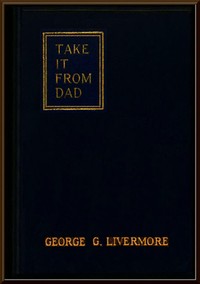
Take It from Dad by George Griswold Livermore
Let's be clear: this isn't a novel with a plot in the usual sense. 'Take It from Dad' is a collection of observations, advice, and personal philosophy from George Griswold Livermore. Born in 1886, he witnessed the tail end of the horse-and-buggy era and lived into the age of spaceflight. The book is structured as a series of short pieces, almost like letters or journal entries, where he addresses topics that mattered to him.
The Story
There's no fictional storyline. Instead, Livermore builds his 'story' through the lens of his own life. He talks about work ethic learned on a farm, the importance of personal responsibility, and his views on family, community, and national character. He reflects on the changes he saw—technological leaps, shifting social norms, wars, and economic upheavals. The narrative is the arc of a life fully lived and the conclusions drawn from it. It's his attempt to pass on what that life taught him, framing it all as practical, fatherly advice for future generations who might be navigating a world he could barely imagine.
Why You Should Read It
I found this book completely absorbing, but not because I agreed with every single point. Its power is in its authenticity. This isn't a historian analyzing the past; it's a man from the past explaining his present. You get the raw, unfiltered voice of early 20th-century America. Sometimes his stubbornness is frustrating, other times his wisdom is startlingly relevant. Reading it feels like discovering a time capsule of American thought. It made me think about what my own grandparents might have believed but never said out loud. It's less about learning historical facts and more about understanding a historical mindset.
Final Verdict
This is a niche read, but a rewarding one. It's perfect for anyone fascinated by social history, genealogy, or the history of everyday American thought. If you love old letters, diaries, or oral histories, you'll feel right at home. It's also great for writers looking to capture an authentic voice from that era. I wouldn't recommend it if you're looking for a fast-paced story, but if you've ever wanted to have a long, direct chat with your great-grandfather about how the world used to be—and how he thinks it should be—this is your book. Just be ready for some strong opinions with your coffee.
This text is dedicated to the public domain. Share knowledge freely with the world.
Robert Miller
1 year agoI appreciate how this edition approaches the core problem, the author’s unique perspective adds a fresh layer to the discussion. This is a solid reference for both beginners and experts.