C
Cheyenne Mountain Zoo
Guest
- Thread Author
- #1
Cheyenne Mountain Zoo said goodbye to Mochi (pronounced MOE-chee), a rare and endangered mountain tapir, on the evening of Tues., Sept. 15.
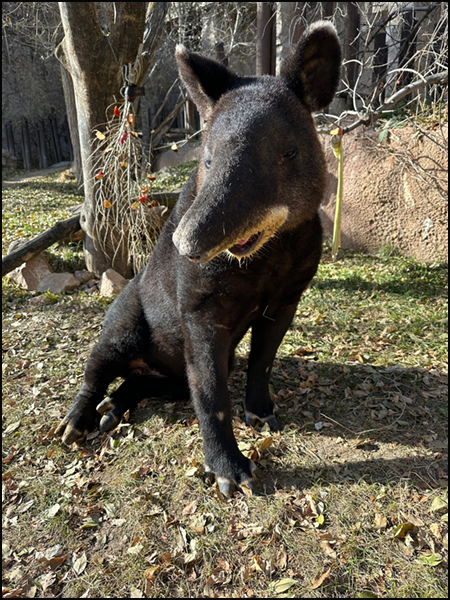
Mochi’s passing marks the loss of a beloved member of the CMZoo family, and one of the very few mountain tapirs remaining in human care in the United States. Now, just two mountain tapirs remain in U.S. zoos, both at Los Angeles Zoo, making opportunities to see this rare species up close increasingly uncommon.
Mochi was humanely euthanized following a rapid decline in his health due to age-related issues. He was 27 years old, which is considered geriatric for a mountain tapir. CMZoo’s two previous mountain tapirs, Cofan and Carlotta, lived to be 19 and 27, respectively.
Mochi’s passing also marks the potential end of a long chapter for mountain tapirs at CMZoo. Since 1995, CMZoo has almost always cared for a mountain tapir, giving generations of guests the opportunity to learn about this unique species. Because mountain tapirs are so incredibly rare, it’s unlikely this iconic species will call CMZoo home again.
Mochi lived at CMZoo from 2000 to 2014, when he moved to Los Angeles Zoo, before returning to CMZoo in 2023 to live out his golden years.
“So many people came to our Zoo not knowing what a mountain tapir was, and then left saying it was their new favorite animal,” Joanna Husby, animal curator, says. “Mochi had a special way of introducing people to this incredible species and creating a connection they didn’t expect.”
He was referred to as ‘magical’ because of his appearance and his consistent ability to make your day better. With his wiggly, prehensile snout, round, bear-like ears, woolly coat, and distinctive high-stepping walk, Mochi’s uniqueness was easy to recognize — and even easier to love. His unique appearance often caught guests’ attention, with some mistaking him for a bear or an anteater.
He was also known for his adorably playful habits. In CMZoo’s tapir history, Mochi was the only tapir known for putting enrichment boxes on his head. He’d trot around his habitat wearing them like a hat, push them off, and put them right back on — sometimes repeatedly. He’d even carry them into the pool for a swim. Big box or little box, Mochi always found a way to make the most of his enrichment.
“How we cared for Mochi is the epitome of how we care for all animals at CMZoo,” Lauren Phillippi, lead animal keeper, says. “We take what we know about a species and use it to provide the best care, but we also focus on animals as individuals, and provide environments and activities that are fulfilling to them as unique beings.”

Mochi’s legacy will continue even after his passing. His care team will contribute information collected about Mochi to ongoing research and use the lessons he taught them about resilience and the importance of listening to and adapting care for each individual animal.
Mochi lived by the three S’s: snoozing, snacks, and scratches.
When he wasn’t relaxing in one of his favorite spots — under his palapa in the shade or beneath the gentle ‘hydro-massage’ of his waterfall — Mochi was enjoying his favorite snacks. He knew what he liked, too. When his care team offered him a mix of veggies, he simply ate around the carrots and went straight for the yams. Once his care team discovered his love of cooked yams, they became a staple: steamed, à la Mochi, just the way he liked them.
But above all else, Mochi loved getting scratches. Around his ears and under the crook of his chin were some of his favorite spots, but when it came to scratches, he wasn’t picky — he was happy to take them just about anywhere. A good scratch could relax Mochi so much that he’d sometimes sit or lie down right in the middle of whatever was happening.
“Mochi was incredibly engaged with his care team and so easy to work with,” Brooke Powell, animal keeper, says. “We could do important health care behaviors like X-rays and injections, and unlike most animals, he didn’t need snacks as reinforcement — he wanted scratches. He’d do just about anything for scratches. He trusted us enough to completely relax during care after a few scratches. It was the highest compliment he could give us.”
Guests also had opportunities to get close to Mochi and even touch him during encounters or on World Tapir Day.
“People would come to the Zoo wearing tapir shirts, carrying tapir plushies, and telling us, ‘I love tapirs!’,” Lauren says. “Some guests discovered Mochi through videos online and planned entire trips from other countries around the opportunity to see him. It was amazing to see how this unique species connected with people and how Mochi, simply by being himself, inspired that passion. Seeing guests fall in love with tapirs and make it a priority to come back to CMZoo and see Mochi was truly incredible.”
Every year on April 27, World Tapir Day, CMZoo would invite the public to come right up to Mochi’s fence and give him scratches under his chin. Mochi had a way of turning first-time visitors into lifelong tapir fans, and his fan club stretched far beyond Colorado.
“World Tapir Day was a special day to celebrate Mochi, but for us and for him, every day was World Tapir Day,” says Lauren. “He gave us so many reasons to celebrate tapirs every single day.”
Mountain tapirs are native to the high-altitude Andes Mountains in Ecuador, Colombia, and Peru. They are listed as Endangered on the IUCN Red List, with fewer than 2,500 mature individuals estimated to remain in the wild. They face growing threats from habitat fragmentation, cattle ranching, and changing temperatures, which are pushing their cool, high-elevation habitat farther upslope.

Often called the ‘architects of the forest,’ mountain tapirs help maintain healthy, diverse ecosystems by dispersing seeds as they feed on native vegetation. Conservation efforts across Colombia, Peru, and Ecuador are working toward protecting the species and its habitat, including creating connected protected areas and partnering with local communities to increase awareness about mountain tapirs and the threats they face.
Mochi was a powerful example of the impact one animal can make. As an ambassador for his species, he helped people connect with mountain tapirs and inspired greater investment in their conservation. Through CMZoo’s Members-Only Conservation Vote, CMZoo and its members contributed more than $135,000 to wild tapir conservation over the years. Through that support, CMZoo staff traveled to Ecuador to study mountain tapirs and raise awareness about this rare species.
“One of my proudest career memories was having the opportunity to track mountain tapirs in the wild and better understand the threats they face,” says Joanna. “The fieldwork is incredibly difficult. Mountain tapirs live high in the Andes Mountains, and the work can be physically and emotionally challenging. But getting to work alongside expert tapir conservationists to collect data that could potentially help protect them made the strenuous work worth it.”
Joanna and the CMZoo team who traveled to Ecuador presented tapir information to local people who had never seen a mountain tapir, helping them understand what a special species shared their home.
“Our work with tapirs over the years here in Colorado helped make those connections possible, because we could share information about the individuals in our care,” Joanna says. “So very little is known about mountain tapirs, and our members played a huge role in advancing that work.”
Much more research, fieldwork, and time are needed to better understand and protect this rare species. While the future of mountain tapir conservation remains uncertain, the significant impact Mochi made at CMZoo and around the world for his species will be felt for many years to come. Mochi’s legacy is a reminder that the future can hold unexpected possibilities — and hope.
“While the chapter of mountain tapirs at CMZoo comes to a close, Mochi’s impact will always be remembered,” says Joanna. “There’s still a lot of hard work to be done for mountain tapir conservation, but one of the lessons working with mountain tapirs has taught me is to never give up hope. That will always be part of Mochi’s legacy, and I hope it inspires people to care about mountain tapirs and their future.”
Cheyenne Mountain Zoological Society was founded in 1926. Today, Cheyenne Mountain Zoo, America’s mountain Zoo, offers comprehensive education programs, exciting conservation efforts and truly fantastic animal experiences. In 2026, Cheyenne Mountain Zoo was voted #2 Best Zoo in North America and CMZoo’s Rocky Mountain Wild was named #2 Best Zoo Exhibit in North America by USA TODAY’s 10Best Readers’ Choice Awards. It is Cheyenne Mountain Zoo’s goal to help guests fall in love with animals and nature, and take action to protect them. Since 2008, CMZoo’s Quarters for Conservation program has raised more than $6 million dedicated to frontline conservation efforts around the world. Of the 237 zoos and aquariums accredited by the Association of Zoos and Aquariums (AZA), Cheyenne Mountain Zoo is one of just a few operating without tax support. Cheyenne Mountain Zoo depends on admissions, membership dues, special event attendance and donations for funding.
The post Remembering Magical Mochi: A Legacy of Mountain Tapirs, Connection, and Hope appeared first on CMZoo.
Mochi’s passing marks the loss of a beloved member of the CMZoo family, and one of the very few mountain tapirs remaining in human care in the United States. Now, just two mountain tapirs remain in U.S. zoos, both at Los Angeles Zoo, making opportunities to see this rare species up close increasingly uncommon.
Mochi was humanely euthanized following a rapid decline in his health due to age-related issues. He was 27 years old, which is considered geriatric for a mountain tapir. CMZoo’s two previous mountain tapirs, Cofan and Carlotta, lived to be 19 and 27, respectively.
Mochi’s passing also marks the potential end of a long chapter for mountain tapirs at CMZoo. Since 1995, CMZoo has almost always cared for a mountain tapir, giving generations of guests the opportunity to learn about this unique species. Because mountain tapirs are so incredibly rare, it’s unlikely this iconic species will call CMZoo home again.
Mochi lived at CMZoo from 2000 to 2014, when he moved to Los Angeles Zoo, before returning to CMZoo in 2023 to live out his golden years.
“So many people came to our Zoo not knowing what a mountain tapir was, and then left saying it was their new favorite animal,” Joanna Husby, animal curator, says. “Mochi had a special way of introducing people to this incredible species and creating a connection they didn’t expect.”
He was referred to as ‘magical’ because of his appearance and his consistent ability to make your day better. With his wiggly, prehensile snout, round, bear-like ears, woolly coat, and distinctive high-stepping walk, Mochi’s uniqueness was easy to recognize — and even easier to love. His unique appearance often caught guests’ attention, with some mistaking him for a bear or an anteater.
He was also known for his adorably playful habits. In CMZoo’s tapir history, Mochi was the only tapir known for putting enrichment boxes on his head. He’d trot around his habitat wearing them like a hat, push them off, and put them right back on — sometimes repeatedly. He’d even carry them into the pool for a swim. Big box or little box, Mochi always found a way to make the most of his enrichment.
“How we cared for Mochi is the epitome of how we care for all animals at CMZoo,” Lauren Phillippi, lead animal keeper, says. “We take what we know about a species and use it to provide the best care, but we also focus on animals as individuals, and provide environments and activities that are fulfilling to them as unique beings.”
Mochi’s legacy will continue even after his passing. His care team will contribute information collected about Mochi to ongoing research and use the lessons he taught them about resilience and the importance of listening to and adapting care for each individual animal.
Mochi lived by the three S’s: snoozing, snacks, and scratches.
When he wasn’t relaxing in one of his favorite spots — under his palapa in the shade or beneath the gentle ‘hydro-massage’ of his waterfall — Mochi was enjoying his favorite snacks. He knew what he liked, too. When his care team offered him a mix of veggies, he simply ate around the carrots and went straight for the yams. Once his care team discovered his love of cooked yams, they became a staple: steamed, à la Mochi, just the way he liked them.
But above all else, Mochi loved getting scratches. Around his ears and under the crook of his chin were some of his favorite spots, but when it came to scratches, he wasn’t picky — he was happy to take them just about anywhere. A good scratch could relax Mochi so much that he’d sometimes sit or lie down right in the middle of whatever was happening.
“Mochi was incredibly engaged with his care team and so easy to work with,” Brooke Powell, animal keeper, says. “We could do important health care behaviors like X-rays and injections, and unlike most animals, he didn’t need snacks as reinforcement — he wanted scratches. He’d do just about anything for scratches. He trusted us enough to completely relax during care after a few scratches. It was the highest compliment he could give us.”
Guests also had opportunities to get close to Mochi and even touch him during encounters or on World Tapir Day.
“People would come to the Zoo wearing tapir shirts, carrying tapir plushies, and telling us, ‘I love tapirs!’,” Lauren says. “Some guests discovered Mochi through videos online and planned entire trips from other countries around the opportunity to see him. It was amazing to see how this unique species connected with people and how Mochi, simply by being himself, inspired that passion. Seeing guests fall in love with tapirs and make it a priority to come back to CMZoo and see Mochi was truly incredible.”
Every year on April 27, World Tapir Day, CMZoo would invite the public to come right up to Mochi’s fence and give him scratches under his chin. Mochi had a way of turning first-time visitors into lifelong tapir fans, and his fan club stretched far beyond Colorado.
“World Tapir Day was a special day to celebrate Mochi, but for us and for him, every day was World Tapir Day,” says Lauren. “He gave us so many reasons to celebrate tapirs every single day.”
Mountain tapirs are native to the high-altitude Andes Mountains in Ecuador, Colombia, and Peru. They are listed as Endangered on the IUCN Red List, with fewer than 2,500 mature individuals estimated to remain in the wild. They face growing threats from habitat fragmentation, cattle ranching, and changing temperatures, which are pushing their cool, high-elevation habitat farther upslope.
Often called the ‘architects of the forest,’ mountain tapirs help maintain healthy, diverse ecosystems by dispersing seeds as they feed on native vegetation. Conservation efforts across Colombia, Peru, and Ecuador are working toward protecting the species and its habitat, including creating connected protected areas and partnering with local communities to increase awareness about mountain tapirs and the threats they face.
Mochi was a powerful example of the impact one animal can make. As an ambassador for his species, he helped people connect with mountain tapirs and inspired greater investment in their conservation. Through CMZoo’s Members-Only Conservation Vote, CMZoo and its members contributed more than $135,000 to wild tapir conservation over the years. Through that support, CMZoo staff traveled to Ecuador to study mountain tapirs and raise awareness about this rare species.
“One of my proudest career memories was having the opportunity to track mountain tapirs in the wild and better understand the threats they face,” says Joanna. “The fieldwork is incredibly difficult. Mountain tapirs live high in the Andes Mountains, and the work can be physically and emotionally challenging. But getting to work alongside expert tapir conservationists to collect data that could potentially help protect them made the strenuous work worth it.”
Joanna and the CMZoo team who traveled to Ecuador presented tapir information to local people who had never seen a mountain tapir, helping them understand what a special species shared their home.
“Our work with tapirs over the years here in Colorado helped make those connections possible, because we could share information about the individuals in our care,” Joanna says. “So very little is known about mountain tapirs, and our members played a huge role in advancing that work.”
Much more research, fieldwork, and time are needed to better understand and protect this rare species. While the future of mountain tapir conservation remains uncertain, the significant impact Mochi made at CMZoo and around the world for his species will be felt for many years to come. Mochi’s legacy is a reminder that the future can hold unexpected possibilities — and hope.
“While the chapter of mountain tapirs at CMZoo comes to a close, Mochi’s impact will always be remembered,” says Joanna. “There’s still a lot of hard work to be done for mountain tapir conservation, but one of the lessons working with mountain tapirs has taught me is to never give up hope. That will always be part of Mochi’s legacy, and I hope it inspires people to care about mountain tapirs and their future.”
About Cheyenne Mountain Zoo
Cheyenne Mountain Zoological Society was founded in 1926. Today, Cheyenne Mountain Zoo, America’s mountain Zoo, offers comprehensive education programs, exciting conservation efforts and truly fantastic animal experiences. In 2026, Cheyenne Mountain Zoo was voted #2 Best Zoo in North America and CMZoo’s Rocky Mountain Wild was named #2 Best Zoo Exhibit in North America by USA TODAY’s 10Best Readers’ Choice Awards. It is Cheyenne Mountain Zoo’s goal to help guests fall in love with animals and nature, and take action to protect them. Since 2008, CMZoo’s Quarters for Conservation program has raised more than $6 million dedicated to frontline conservation efforts around the world. Of the 237 zoos and aquariums accredited by the Association of Zoos and Aquariums (AZA), Cheyenne Mountain Zoo is one of just a few operating without tax support. Cheyenne Mountain Zoo depends on admissions, membership dues, special event attendance and donations for funding.
The post Remembering Magical Mochi: A Legacy of Mountain Tapirs, Connection, and Hope appeared first on CMZoo.