
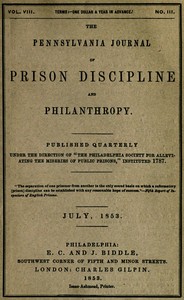
The Pennsylvania Journal of prison discipline and philanthropy (Vol. VIII, No.…
The Story
This isn't really a story with one plot— it’s more like a front-row seat to a major argument from the past. Volume VIII, No. something of the Philadelphia Society's journal drops you right into the 1800s, just as folks were fighting about how to run prisons. Some wanted them harsh— total silence, hard labor, no visitors. Others, like our Philly crew, believed that prisons should be places of discipline and philanthropy (yes, they used that word a lot). You get letters, case studies, long-winded debates about whether allowing conversation at work is a good thing or a disaster. It follows their push for a system that's now called the Pennsylvania System— where each prisoner stays alone in a cell but also gets some moral guidance and a chance to work. Sounds modern, right? But then conflicts pop up: does solitude make people insane? Are they getting to soft on criminals? Plus, practical issues like crowding in cells or who funds these experiments. It's a piece of our messy social evolution, and honestly, it reads better than a novel when you piece it together because all the characters are real people with real doubts.
Why You Should Read It
I know a dry-sounding old journal seems like a dad museum trip, but trust me—stick with it. What got me was how little we’ve changed in 150 years. The same questions about rehabilitation vs. punishment fill page after page, and they even worry about racial bias and profit over charity. The writers sound nice and careful, but their passion leaps off the page you start seeing criminal justice as less about a villain and victim and more about a community project. My favorite parts are snippets of inmate stories and the quips thrown back at opponents— there is humor in these sad fights. Plus, just picture those old manual printing jobs with zero auto-correct. It connects my modern reading brain with someone from centuries past, tying my gripes today about failed reforms to old broken attempts. Good vibe if you enjoy questioning progress in an honest way.
Final Verdict
Perfect for history buffs, true-crime overthinkers, activists bored with pundit twitter fights, or even students catching thread of how societies tinkered with “making things right.” It’s not for quick pleasure travel on a plane puff piece—more of a hot coffee read on a rainy weekend hour. But if you have earbuds for background white noise and love seeing dead-serious people bump strategies into good intentions you respect even flaky mistakes? Then buy or free-archive this journal chunk. Its timely surprise is why I keep quoting to any friend curious about change in broken systems.
This historical work is free of copyright protections. It is now common property for all to enjoy.
George Wilson
9 months agoHaving read the author's previous works, the author manages to bridge the gap between theory and practice effectively. It definitely lives up to the reputation of the publisher.
Thomas Williams
3 months agoAfter spending a few days with this digital edition, the formatting on mobile devices is surprisingly crisp and clear. This exceeded my expectations in almost every way.






Richard Harris
1 year agoFrom a researcher's perspective, it manages to maintain a consistent flow even when discussing difficult topics. It’s a comprehensive resource that doesn't feel bloated.