
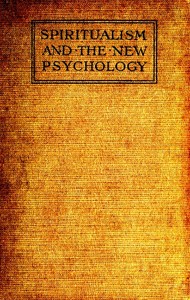
Spiritualism and the New Psychology by Millais Culpin
Published in 1920, Millais Culpin's Spiritualism and the New Psychology is a fascinating time capsule. It captures the moment when two powerful forces collided in the public imagination. On one side was Spiritualism, a full-blown movement offering comfort and connection to the afterlife through mediums and séances. On the other was the fledgling field of psychoanalysis, which proposed that our conscious minds are just the tip of a much stranger, deeper iceberg.
The Story
There isn't a traditional plot with characters, but there is a clear narrative drive. Culpin, a medical man, acts as our guide. He takes us into the dimly lit parlors of spiritualist meetings, describing the phenomena he witnessed firsthand. He then meticulously applies the concepts of the new psychology—like hysteria, dissociation, and the unconscious—to these experiences. The 'story' is his investigation. He argues that the trance states of mediums, the feeling of being controlled by another entity, and even the physical manifestations in séances bear a striking resemblance to documented psychological conditions. The book systematically builds a case that what was being attributed to spirits could be explained by the uncharted workings of the human psyche.
Why You Should Read It
This book is a masterclass in critical thinking applied to the extraordinary. What I love most is Culpin's tone. He's not a cynical debunker shouting from the sidelines; he's a curious observer who genuinely wants to understand. He treats the spiritualists' experiences with respect, even as he offers a different explanation. Reading it today, it feels incredibly relevant. We still grapple with explaining unusual mental states, the line between belief and delusion, and our hunger for meaning. Culpin's work is a reminder that sometimes the most profound mysteries aren't 'out there'—they're in the architecture of our own minds. It's less about disproving ghosts and more about discovering the incredible, often misunderstood, power of human psychology.
Final Verdict
Perfect for readers who enjoy history of science, true crime-style investigations into odd beliefs, or anyone fascinated by the boundaries of the mind. If you liked books like The Immortal Life of Henrietta Lacks for its look at science and society, or you're curious about the early days of psychology, you'll find Culpin a compelling and surprisingly accessible guide. It's not a light beach read, but for the intellectually curious, it's a hidden gem that connects dots between faith, fraud, and the fascinating science of the self.
This content is free to share and distribute. Enjoy reading and sharing without restrictions.
Margaret Jones
1 year agoAs a professional in this niche, the step-by-step breakdown of the methodology is extremely helpful for students. Truly a masterpiece of digital educational material.
Thomas Rodriguez
6 months agoExtremely helpful for my current research project.
Susan Lee
5 months agoClear, concise, and incredibly informative.
Charles Davis
1 year agoIt’s rare to find such a well-structured narrative nowadays, the data points used to support the main thesis are quite robust. Finally, a source that prioritizes accuracy over hype.




Thomas Moore
2 months agoI stumbled upon this title during my weekend research and the way it handles controversial points with balance is quite professional. Thanks for making such a high-quality version available.