
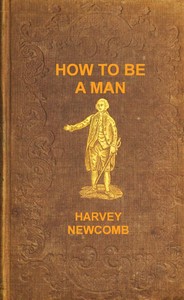
How to be a man : a book for boys, containing useful hints on the formation of…
Published in 1847, Harvey Newcomb's How to be a Man isn't a novel. It's a guidebook, written by a Congregational minister, aimed squarely at young boys and their parents. Imagine a very long, very detailed letter from a stern but caring grandfather, covering every aspect of a boy's life.
The Story
There's no traditional story here. Instead, Newcomb systematically lays out his blueprint for building a respectable, Christian gentleman. The book walks a boy through his entire development. It starts with the foundations: duty to God, respect for parents, and the importance of a good education. Then it gets incredibly specific. There are chapters on forming good habits, controlling your temper, choosing the right friends, and even how to behave at the dinner table. He advises on future careers, warns against the temptations of bad company and 'pernicious' reading material (like sensational novels), and emphasizes hard work, honesty, and piety as the non-negotiable pillars of manhood. The 'plot' is the journey from a boy to the man Newcomb believes society needs.
Why You Should Read It
You should read this not for life advice, but as a historical document. It's a raw, unfiltered look at the values of middle-class America before the Civil War. What's captivating is the mix of timeless wisdom and jarringly dated views. His insistence on integrity and hard work still resonates. But his deep suspicion of leisure, his rigid social rules, and his view that a man's primary purpose is to be a useful, sober pillar of the community feel like they're from another planet. Reading it, you constantly compare his world to ours. It makes you think about which parts of 'how to be a good person' are universal and which are purely products of their time. It's also unintentionally funny in parts, especially when he goes into extreme detail about minor social faux pas.
Final Verdict
This book isn't for someone looking for a gripping narrative. It's perfect for history lovers, sociology nerds, or anyone curious about the roots of modern masculinity. It's a primary source that shows where we came from. Parents might read it and feel a strange mix of gratitude for modern child-rearing and nostalgia for its clear, if rigid, expectations. It's a slow, thoughtful read that works best if you dip into a chapter at a time, discuss it with friends, and marvel at how much—and how little—has changed in the project of raising good people.
This book is widely considered to be in the public domain. You do not need permission to reproduce this work.
Karen Garcia
2 years agoGreat value and very well written.
Daniel Young
1 year agoI have to admit, the emotional weight of the story is balanced perfectly. Highly recommended.
Joshua Torres
9 months agoI had low expectations initially, however it creates a vivid world that you simply do not want to leave. Exactly what I needed.
Edward Smith
1 year agoHaving read this twice, the arguments are well-supported by credible references. One of the best books I've read this year.




Paul Jones
6 months agoAfter spending a few days with this digital edition, the visual layout and supporting data make the reading experience very smooth. It’s hard to find this much value in a single source these days.