
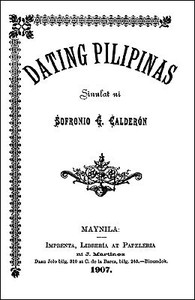
Dating Pilipinas by Sofronio G. Calderón
Okay, let's clear something up first: this isn't a romance novel. 'Dating Pilipinas' (which translates to 'Ancient Philippines' or 'Philippines of Old') is a scholarly work from 1919, but don't let that scare you off. Calderón wrote it to document traditions that were disappearing under American influence. He structured it like a guide, walking you through the entire life cycle of love and family, from birth to marriage to death, as it was practiced in various regions across the islands.
The Story
There's no single narrative. Instead, think of it as a collection of social blueprints. Calderón lays out, step-by-step, how everything worked. He explains the intricate courtship rituals, like harana (serenading) and the role of a go-between. He details the marriage negotiations, which were often between families, not just two people. The book is packed with specific practices: the symbolic items in a dowry, the foods served at weddings, and the strict rules for newlyweds. It also covers the beliefs surrounding it all—the omens, the superstitions about finding the right partner, and the consequences for breaking social codes. The 'story' is the quiet drama of an entire society operating on a set of rules most of us have never heard of.
Why You Should Read It
I loved this book because it makes history feel immediate and human. You're not reading about kings and battles; you're reading about how your ancestors might have fallen in love. Some passages are hilarious (like bad luck signs involving chickens), others are deeply moving (the descriptions of community support for new families). Calderón’s tone isn't dry; you can feel his urgency to preserve this knowledge. It gives you a new lens to look at modern Filipino culture. Why do we value family so much? Why are some courtship gestures considered so significant? This book offers clues. It connects dots you didn't even know were there.
Final Verdict
This book is perfect for history buffs who want to go beyond dates and politics, and for any Filipino (or anyone interested in the Philippines) who is curious about their cultural roots. It's also great for writers looking for authentic historical details. It’s a short, dense read, more for dipping into than breezing through. If you approach it like a fascinating conversation with a very knowledgeable elder, you'll get a lot out of it. Just be ready for a mindset shift—it's a journey to a world where love was a community project, guided by rituals we've mostly forgotten.
This is a copyright-free edition. You can copy, modify, and distribute it freely.
Melissa Walker
1 year agoRead this on my tablet, looks great.
Steven Robinson
6 months agoRecommended.




Melissa Davis
1 year agoGreat read!