
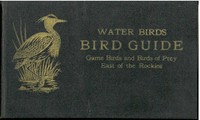
Bird Guide: Water Birds, Game Birds, and Birds of Prey East of the Rockies by Reed
Let's be clear from the start: this isn't a novel. Bird Guide: Water Birds, Game Birds, and Birds of Prey East of the Rockies is exactly what it says on the cover—a field guide. But don't let that fool you into thinking it's dry. Published in 1912, it's a meticulously organized catalog. Chester Reed breaks birds down by type: the diving ducks, the wading herons, the soaring hawks and eagles. For each one, he gives you the essentials: size, color patterns, call descriptions, range maps, and preferred habitats. The heart of the 'story' here is Reed's mission to make bird identification accessible and accurate for anyone, from a curious kid to a serious hunter.
The Story
The book doesn't have a plot in the traditional sense. Its narrative is the journey of observation. Reed acts as your guide, walking you through the marshes, fields, and skies of early 20th-century America. He points out the subtle differences between a Mallard and a Black Duck. He describes the haunting cry of a loon. He notes which ducks are the best table fare and which hawks are considered 'beneficial' for farmers. The progression is logical and calm, moving from one family of birds to the next, building a complete picture of the avian life east of the Rockies.
Why You Should Read It
You should read this for the perspective. Holding this book is like holding a slice of history. Reed's writing is straightforward, but his passion shines through. What's most striking is the book's dual purpose. It celebrates birds for their beauty and interesting habits, but it also calmly discusses their value to hunters. There's no judgment in his tone; it's just the reality of his time. Reading his careful notes on a Canvasback duck's flavor makes you pause and think about how differently we often interact with nature today. It's a quiet, powerful reminder of how much our cultural relationship with the wild has evolved.
Final Verdict
This is a perfect pick for history lovers, birdwatchers with an interest in the past, or anyone who enjoys primary sources. It's not a flashy modern guide with color photos, but its detailed illustrations and earnest, clear prose have a charm all their own. You'll come away with a deeper appreciation for both the birds themselves and the man who took such care to document them for his contemporaries. Think of it less as a manual and more as a conversation with a very knowledgeable, early-1900s friend on a long walk outdoors.
This title is part of the public domain archive. It serves as a testament to our shared literary heritage.
Linda Garcia
1 month agoIt took me a while to process the complex ideas here, but the chapter on advanced strategies offers insights I haven't seen elsewhere. A mandatory read for anyone in this industry.
Susan Smith
1 year agoInitially, I was looking for a specific answer, but the logic behind each conclusion is easy to follow and verify. A rare gem in a sea of mediocre content.
Mark Jackson
9 months agoThe layout is very easy on the eyes.
Melissa Clark
1 year agoRecommended.









David Thompson
6 months agoOne of the most comprehensive guides I've read this year.